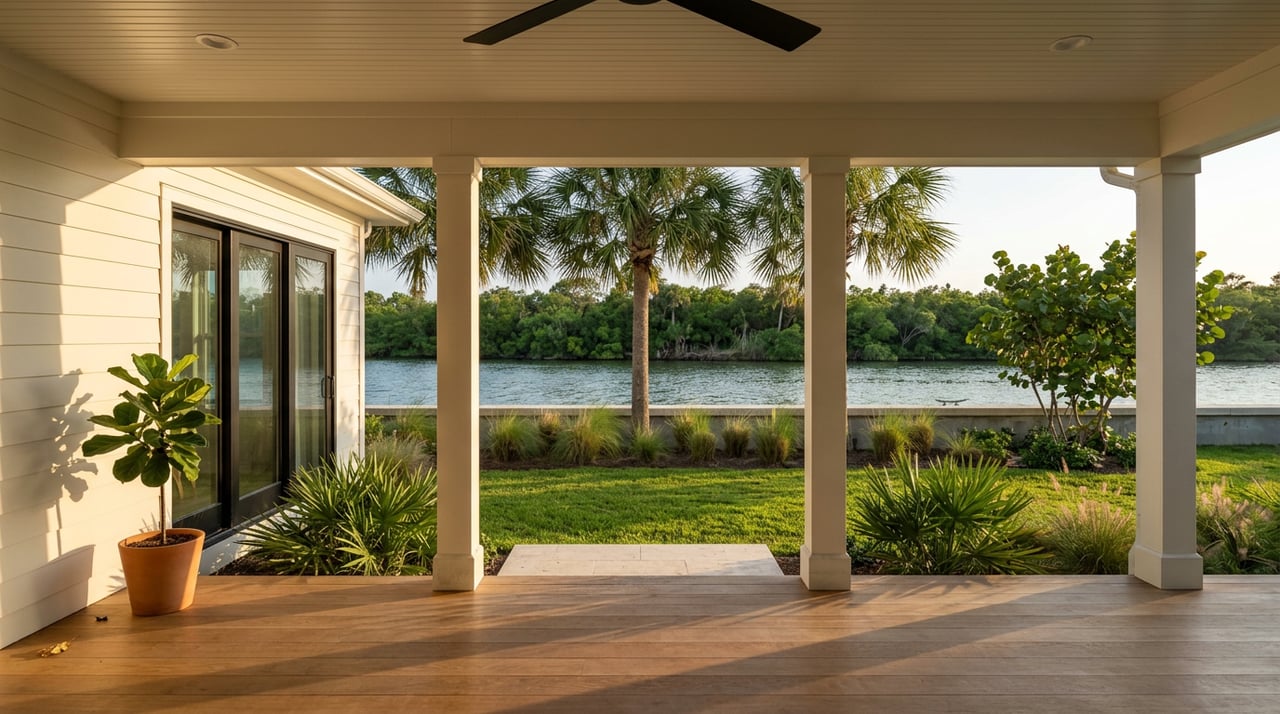
The Reserve at St. Charles Bay Sits Inside One of North America's Great Bird Migrations. September Is When You Notice.
July 16, 2026
July 16, 2026
The 2.1-mile boardwalk that loops through The Reserve doesn't just give you a place to walk before coffee. In September, it puts you underneath the funnel where thousands of ruby-throated hummingbirds stage their last meal before crossing the Gulf. Most of your neighbors book festival tickets and drive into Rockport. The quieter move is realizing the festival is largely a formal name for what is already happening in your yard.
This is a piece for people who already own here. You know the boardwalk, the fishing pier, the hammock park. What follows is what those amenities become for four specific days this fall, and how to pair them with the two Lamar Peninsula assets most residents underuse.
The distinction matters. The Rockport-Fulton area sits on the migratory flyway with beaches, bays, estuaries, inland woods, prairies, and fields, and holds ten birding sites on the Great Texas Birding Trail. The Reserve is one of the addresses inside that geography, not adjacent to it. Your seawall, your canal, and the wetlands the developer preserved on the community's edge are habitat, not landscaping.
The ruby-throated hummingbird migration itself is not a modern discovery. The purpose of the celebration is to mark the fall migration of the Ruby-throated Hummingbird through the area, first documented by Connie Hagar in 1938. Hagar was working from a backyard in Rockport, roughly eleven miles south of your front door. The birds she counted then still route through the same peninsula.
What that looks like from a Reserve homesite, by late August into mid-September: sustained hummingbird traffic at any flowering shrub, aggressive territorial behavior around feeders, and a noticeable uptick of birders with long lenses parked near Goose Island's day use lot before sunrise.
Mark the dates. The 38th Annual Rockport-Fulton HummerBird Celebration runs September 17–20, 2026. Programming is anchored at 319 Broadway in Rockport, roughly a fifteen-minute drive south from the Lamar Peninsula, and spans four days of layered events.
What the festival actually includes, so you can pick rather than sample:
If you go for a single day, Friday morning tends to be the least crowded, because the Saturday speaker slate pulls the largest out-of-town crowd.
The celebration was founded in 1988 and remains, per its organizers, the first U.S. event built around a single bird species. That founding logic is why the schedule is dense with science instead of general nature programming.
The Goose Island State Park entrance is 0.6 miles from the Reserve. That is closer than your grocery run. It is also closer than most residents' own mailboxes were at their prior home.
Inside the park, Texas Parks & Wildlife runs a program that has almost no marketing outside the state agency's calendar page. Park hosts lead a bird tour into the Big Tree Natural Area, a section of the park otherwise closed to the public, observing birds across live oak forests, coastal prairies, marshes, and bay shorelines. The walk runs Friday mornings at 8:30 a.m., with registration required due to limited tram seating.
Two logistical notes that determine whether you actually get a seat:
The Big Tree itself is worth the parking on its own. It has stood on this coast for centuries and was named the State Champion Coastal Live Oak in 1969. It lost the state title in 2003 to a larger specimen on the San Bernard refuge, which is a footnote most locals do not know. It remains one of the largest live oaks in the country.
For residents who prefer to build their own itinerary rather than buy a festival package, a realistic plan looks like this:
| When | What | Where |
|---|---|---|
| Fri 7:00 a.m. | Coffee to go | Rockport Coffee |
| Fri 8:30 a.m. | Big Tree Bird Walk (register in advance) | Goose Island State Park, Day Use lot |
| Fri afternoon | Speaker session or Hummer Mall | Rockport-Fulton, 319 Broadway |
| Sat morning | Boat birding trip through festival | Departs Rockport waterfront |
| Sat evening | Barbecue | Stevie Lew's BBQ Kitchen |
| Sun sunrise | Own boardwalk, coffee, binoculars | The Reserve, 2.1-mile loop |
| Sun late morning | Hummer Home garden tour | Private residences, festival map |
The point of the Sunday sunrise line is not filler. By the fourth day of the celebration, the birds are still moving through, but the crowds have thinned. Your own boardwalk becomes the quiet observation deck that visiting birders spent four days trying to find.
If September is the hummingbird month, February is the crane month, and the crane story has been quietly rewriting itself. For the 2024–2025 wintering season, the U.S. Fish and Wildlife Service estimated a record 557 whooping cranes wintering along the Texas Gulf Coast, the highest count ever recorded for the species. That is the endpoint of a recovery arc that started with fewer than 25 whooping cranes in the world in 1942.
Those birds winter at the Aransas National Wildlife Refuge, established in 1937 and now more than 115,000 acres, best known as the wintering home of the last wild flock of endangered whooping cranes. The refuge sits north of your peninsula. From the Reserve, it is a comfortable morning trip.
The formal celebration is the 29th anniversary Whooping Crane Festival in Port Aransas, February 19–22, 2026. Reserve owners who winter here should treat the September and February festivals as bookends of the same annual calendar, not as two separate events to weigh against each other.
A candid caveat on expectations: inside the refuge itself, sightings can be harder than they sound. One recent visitor account noted that ranger conversations put the odds of seeing a whooping crane inside the main refuge grounds at only a small percentage on any given day, because most cranes cluster in areas away from the auto tour. The reliable sightings, historically, happen on chartered boat trips from Rockport and Fulton, and along the shallow bays that border the Lamar Peninsula. Which is another way of saying: your neighborhood.
Three small habits, mentioned by park staff often enough that they are worth putting in writing:
None of these show up in the festival brochure. All three come up in conversation with the volunteers who run the Goose Island programs and the Sink Your Shucks oyster reef project that operates out of the same park.
Most owners at The Reserve bought for the water, the dock, and the lock-and-leave rhythm. The migration calendar is a quiet second dividend on that purchase. It gives the shoulder seasons a reason. It gives the boardwalk a use beyond exercise. It gives visiting family a story to take home that is more specific than "we went to the beach."
The Rockport-Fulton Chamber will keep updating festival details through the summer. Ranger Sara Rock at Goose Island answers the phone at (361) 729-2858 if you want to confirm a tram slot. Between those two contacts and your own front door, the September weekend organizes itself.
If you are thinking about your Reserve home in a different way this fall, whether that is refreshing the landscape to attract more of what flies through, adding a second property on the peninsula for family, or evaluating what your home is worth after another season of coastal appreciation, Kathy Tullis is available to walk your property, talk through options, and prepare a current valuation grounded in what buyers are actually paying on the Lamar Peninsula today.

With decades of top-tier experience and a passion for personalized service, Kathy Tullis is more than an agent—she's your dedicated guide in achieving your real estate dreams. Her proven expertise and client-first approach ensure every detail is handled with care and excellence.
Get In Touch With Kathy To Learn More